Table Of Content

Both of these artists were key sources of inspiration for the designers of the International, or Swiss, Style of the 1950s. And no wonder — simple blocks of color make for a simple and stunning backdrop to grid-based layouts. Many significant graphic design movements, such as the Swiss Style of the 1950s, the 1980s Memphis Style, and 1990s Minimalism, took their cues from the world of abstract art. For designers today, abstract art is a term that encompasses a huge range of different styles and artistic approaches. Generally, however, all aspire to represent creativity, visuality, and artistic expression in a non-realist way. Yet there may be no purer joy than painting for the sake of painting, and making abstract art can often feel like that, with its expressive freedom in color, texture, and emotion.
Cubism
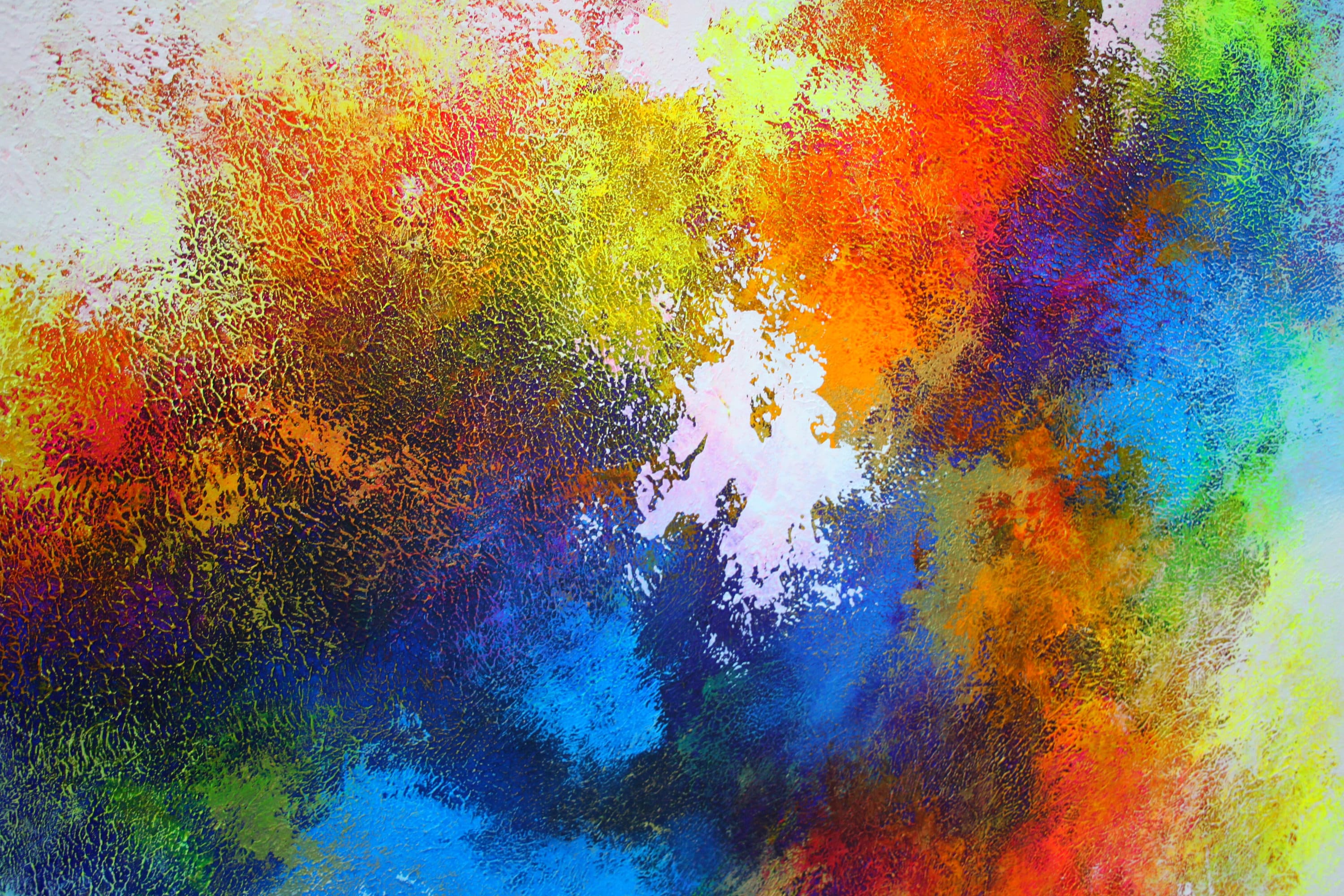
But figurative and representational (or realistic) art often contain partial abstraction. The raw language of color as developed by the Fauves directly influenced another pioneer of abstraction, Wassily Kandinsky. The works on handmade paper point to a new direction in Zeng’s work, ambitiously combining Christian, Buddhist, and literati iconography. The subject matter moves fluidly from the crucifix to representations of rocks and old trees—symbols of strength, resilience, and longevity in traditional Chinese culture. As with Zeng Fanzhi’s paintings, these exquisite drawings deliberately defy categorization in their alignment with the great traditions of Asian and European art.
Introducing a New Series About the Visionary Designers Who Shape Our World - WIRED
Introducing a New Series About the Visionary Designers Who Shape Our World.
Posted: Wed, 18 Jan 2017 08:00:00 GMT [source]
Types of Abstract Art to Know and Use in Your Designs
They argued that art was essentially a spiritual activity; to create the individual's place in the world, not to organize life in a practical, materialistic sense. During that time, representatives of the Russian avant-garde collaborated with other Eastern European Constructivist artists, including Władysław Strzemiński, Katarzyna Kobro, and Henryk Stażewski. The eclectic Memphis Style is the result of a movement initiated by a group of Italian designers, architects, and artists in the early 1980s. Memphis style emphasizes geometry, bold color, and pattern, and touches on a range of art styles from Art Deco to Kitsch. Catalan artist Joan Miró combined abstract line drawings and paintings with surrealist subject matter.
Netflix’s ‘Abstract: The Art of Design’ Returns to Awe Us With the Inner Workings of Creative Minds - Observer
Netflix’s ‘Abstract: The Art of Design’ Returns to Awe Us With the Inner Workings of Creative Minds.
Posted: Sat, 21 Sep 2019 07:00:00 GMT [source]
Season 2 (
Halftone describes the dotted effect created through printing, by breaking images up into a series of dots. The effect was replicated by pop artists such as Andy Warhol and Roy Lichtenstein. During the 1960s and 1970s these artists often strove to make their artworks look like newspaper billboard ads.
Step inside the minds of the most innovative designers in a variety of disciplines and learn how design impacts every aspect of life. Upon entering the ground floor of the Scuola Grande, visitors are introduced to the classical proportions of the 16th-century building, bracketed by two sizeable multi-panel oil paintings, one alluding to Buddhist iconography, the other Christian. Tadao Ando’s design is a progression of walls with a series of increasingly large apertures, each of which is self-contained yet connected with the others. These openings connect two larger works, one at each end of the space as on the ground floor, but, in this case, the two paintings are not strictly representational but instead suggest abstractions of light and water. A selection of Zeng’s smaller format oil paintings and works on paper are respectively featured in and around Ando’s temporary walls. Against the backdrop of the Misericordia’s majestic spaces—steeped in history and richly decorated with frescoes—Zeng’s project grounds his audience in the visceral experience of art.
Although not strictly abstract, surrealist art aims to achieve a distorted version of reality by manipulating realist imagery. Artists such as Salvador Dalí, René Magritte, and Frida Kahlo were influenced by psychoanalysis, a growing field of study and practice in the early 20th century. Their paintings and sculptures sought to expand the creative potential of the mind, by juxtaposing images together that appeared irrational and unconventional. At the start of the 20th Century, artists Pablo Picasso and Georges Braque endeavored to represent all possible viewpoints of a subject or object, all at once. The result of the experiment was Cubism, an abstract art style in which loosely-identifiable subjects appear fragmented and geometrical.
Artists such as Charles and Ray Eames revisited and reinterpreted indigenous art styles during the 1950s, resulting in organic shapes and an emphasis on natural materials, textures, and colors. Below, discover the ten abstract art styles designers consistently depend on for injecting creativity, beauty, and interest into commercial projects, and our edit of the best images to experiment with for packaging, web design, and print projects. A number of studies have found that abstract art can have significant emotional effects on the viewer, perhaps in part because abstraction frees the brain from the dominance of reality. A 2012 study made a direct connection between looking at abstract art and feelings of pleasure. With this in mind, savvy designers and brands can use abstract images to manipulate the mood of a viewer, and even increase the likelihood of a product being purchased.
Much of his work used, or was influenced by, the printing process of lithography, which may have contributed to the graphic feel of his art. Read on to learn more about different types of abstract art — from cubism to surrealism, marbling to abstract organic — and which styles are being reinterpreted for contemporary design, as well as how you can use abstract images in your own designs. Even art that aims for verisimilitude of the highest degree can be said to be abstract, at least theoretically, since perfect representation is impossible. Artwork which takes liberties, e.g. altering color or form in ways that are conspicuous, can be said to be partially abstract. In geometric abstraction, for instance, one is unlikely to find references to naturalistic entities.
Project Runway
The artist’s new oil paintings emerge from decades of research in color theory, drawing on and challenging Impressionism and Pointillism, whereby images materialize only through the careful placement of individual color marks. Here, the brushwork creates figurative elements readily recognizable from afar but, when viewed up close, dissolve into the materiality of oil paint. Tonal variations in one color give way to interwoven schemes of colors, often with more than 30 types of bright pigments in one image. The installation provides an in-depth glimpse into his command of the medium, his wet-on-wet technique, and the emphasis on the sheer materiality of paint that defines his work. In a world now inundated with AI-rendered images, Zeng challenges viewers to recognize the superiority of painting as a time-honored art and craft. While realist art tries to put forward a depiction of actual reality, abstract art strives for the exact opposite.
Businesses that would like to be affiliated with a sense of modernity and a pioneering approach often use abstract imagery in their branding and marketing. Abstract art went hand-in-hand with the evolution of Modernism and Post-Modernism, interdisciplinary movements that encouraged a break away from the traditional approaches, styles, and ways of thinking inherited from the Renaissance, Early Modern, and Victorian ages. A diverse digital database that acts as a valuable guide in gaining insight and information about a product directly from the manufacturer, and serves as a rich reference point in developing a project or scheme. Common Sense Media's unbiased ratings are created by expert reviewers and aren't influenced by the product's creators or by any of our funders, affiliates, or partners.
However, many artists looked to sculpture and relief to translate abstract concepts into 3D form. Designers can give layouts a retro flavor by using halftone backgrounds or overlays. Or, try experimenting with a varying halftone design to add texture and interest to a gradient design. Bright, eye-catching colors are a natural partner for this pop art-inspired effect, or opt for monochrome to play up its newspaper heritage.
Today, designers can update cubism with low-poly backgrounds and architectural planes, giving a 3D, immersive quality to background textures, vector illustrations, and app designs. Snubbed by some critics as being poor in taste, others love Memphis’ fun, experimental energy. Contemporary designers have rediscovered and revived the Memphis Style, and it’s the style’s optimistic and joyful mood that brands have found to be effective for attracting and converting customers. Art reached new levels of abstraction through the work of American painter Mark Rothko, who was renowned for his large-scale “Color Field” paintings. His monumental canvases explored the psychological and dramatic potential of block color. In the United States, Art as Object as seen in the Minimalist sculpture of Donald Judd and the paintings of Frank Stella are seen today as newer permutations.
Because actual objects or people are not featured in abstract imagery, designers can apply these styles of images to a wide range of projects. Abstraction places the focus on the visual mood and personality of the image rather than the realist content. So, the designer can give a design a certain look and feel through the manipulation of color, form, and pattern, while retaining a neutrality in the design. The Tadao Ando-designed exhibition focuses on Zeng Fanzhi’s ambitious practice of redefining the abstract through figurative representation and vice versa.
Today, abstract and non-representational art is one of many rich, relevant genres of painting. Like representational art, painting successful abstract art takes practice, and an understanding of composition, color mixing, and values. If abstract art emerges from vision and intuition, it’s still grounded in discipline. Although it was later outmoded by abstract modernist art, surrealism continues to inspire artists and designers today, who value the style for its ability to surprise and delight the viewer. Fluid, curving forms and muted mid-century colors are the hallmarks of the abstract organic art style.
Inspired by the work of the American Abstract Expressionist Jackson Pollock, paint splatter images and drip textures bring an eclectic and energized feel to design projects. Particularly beautiful as backgrounds for packaging and large-scale print designs — such as posters and banners — these types of images bring color, texture, and movement to layouts, while creating a surprisingly uniform and versatile backdrop for typography and logos. To modern eyes, abstract and abstract expressionist paintings can look so effortless and so familiar that we might forget how revolutionary abstract art was in the 20th century.


No comments:
Post a Comment